On Nick Bantock, Visual Literature, and the Imagination
– Article by Kat McNichol –
My Aunt Pat introduced me to Nick Bantock’s books many years ago, and I’ve loved his work ever since. I think of her whenever I pick one up.
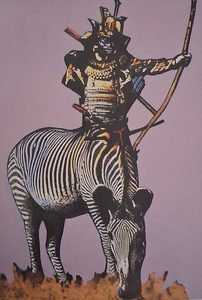
Bantock is a British-born artist who made Canada his home. He studied painting and spent years working as an illustrator, designing hundreds of book covers before creating books of his own. He was, in some ways, an accidental writer. The story goes that he was meeting with a publisher about other projects when an editor noticed a mock-up of Griffin & Sabine in his bag and asked to see it. That chance discovery eventually became an international bestseller and the beginning of a remarkable series of books.
If you haven’t come across Griffin & Sabine, the books tell the story of two artists who begin corresponding through letters and postcards, even though they’ve never met. As you read, you open envelopes, unfold letters and examine the illustrations, stamps, handwriting and collage, trying to piece together what’s happening between the characters. There’s something wonderfully intriguing about reading what feels like somebody else’s private correspondence, especially when you’re never entirely sure what’s real, what’s imagined, or what might be happening just beyond what’s written on the page.
What I especially love about Nick Bantock’s work is that the art doesn’t just illustrate the writing, and the writing doesn’t just explain the art. They work together to tell the story. Bantock helped introduce a much wider audience to the idea that a book could be a physical, interactive work of art, one where the reader participates in the storytelling itself.
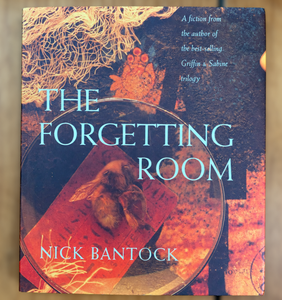
Of all his books, though, The Forgetting Room is by far my favourite. It tells the story of Armon Hurt, who inherits his artist grandfather’s home in Spain and discovers a mysterious collection of paintings, letters and clues that lead him through a series of puzzles involving his family’s history and his own creativity. It’s a strange, sometimes surreal story about memory, identity, art and the things we inherit from the people who came before us.
There’s something about this book that keeps drawing me back. I can’t entirely explain what it is, although I think part of it has to do with the way Nick Bantock brings together so many different elements of storytelling. Paintings, collage, handwritten fragments, visual puzzles and the physical pages of the book all contribute to the experience. The images invite you to look more closely, to notice connections and consider possibilities that aren’t necessarily explained in the text. I love how I keep discovering myself through the creative work of someone else. I return to this book again and again and still find something worth thinking about.
Archetype Cards – the archeo by Nick Bantock
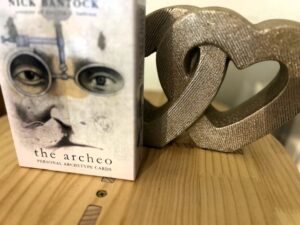
Bantock also created The Archeo, a collection of illustrated archetype cards that offer another way of working with images and stories. The deck includes 40 characters representing different qualities, perspectives and possibilities within ourselves. Bantock encourages readers to imagine their own lives as epic stories, populated by these different archetypal figures. I love this idea of developing a personal mythology, of exploring our lives through stories, symbols and the different parts of ourselves that emerge along the way.
The very first card I pulled from the deck was Duende, which seemed especially fitting. In Spanish artistic tradition, duende is associated with a kind of creative intensity that’s difficult to explain, something you recognize in a work of art without necessarily being able to say where it comes from. The term also appears in The Forgetting Room, which made the coincidence even more interesting.
Bantock’s description of Duende is wonderful:
“It is the passionate specter of the earth, a hobgoblin-muse demanding that we open ourselves to all possibilities. With guttural song summoned from the caves of our souls, it accepts no lies.”
Later, in The Duende’s Tale, we find another description that I especially love:
“But mostly I just feel it… I feel it out there, just beyond the edges of our furthest vision.”
That comes very close to how I feel about The Forgetting Room. I’ve never been able to explain exactly why the book keeps drawing me back, only that there’s something about it I find endlessly fascinating. The word duende also appears in the book itself, which made pulling that particular card even more interesting.
One of the questions Bantock suggests asking Duende is:
“Duende, how do I overcome the fear of exposing myself to your fire?”
How indeed. I love this question, and the idea that we might approach an image not simply as something to interpret, but as something we can enter into conversation with. What might Duende say in response? And what might we discover about ourselves through the process of writing that conversation?
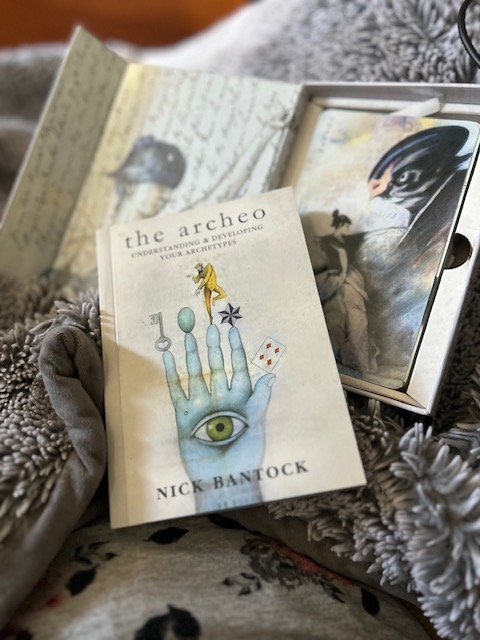
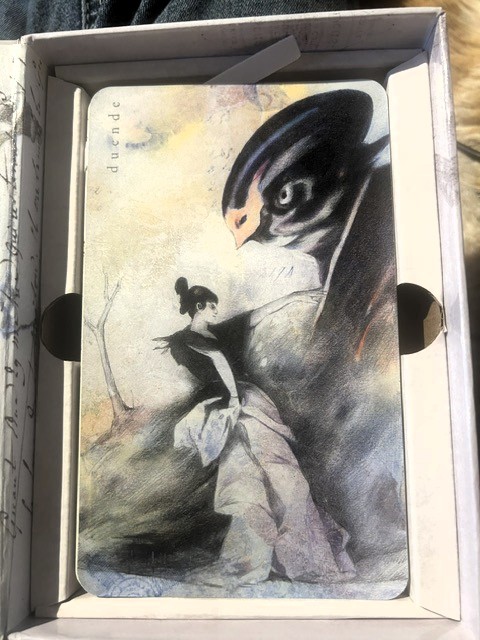
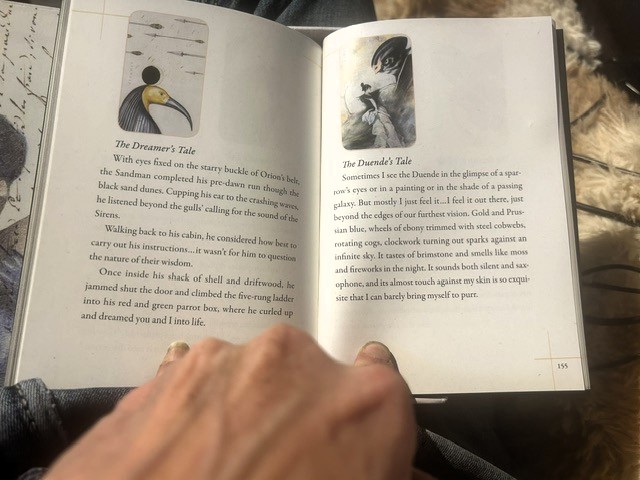
I especially love using these cards for creative and reflective writing, treating the figures as conversational partners rather than simply images to interpret. You might write a letter to one and respond from its perspective, or bring two together in dialogue to explore what they might say to each other, where they disagree, and what might emerge from their exchange.
They can also inspire entirely fictional stories, introduce unexpected perspectives, or suggest characters you might never have imagined otherwise. There’s no need to decide what an image means or where the writing should lead. Sometimes the most interesting discoveries come from following whatever catches your attention and seeing what emerges along the way.
I love how an image can hold a whole story without explaining what that story should be.
And there’s a Dreamer card in the deck, too. Of course there is! I couldn’t help smiling at that one.
Visual Art and Literature That Crosses Boundaries
Nick Bantock has had enormous commercial success. Griffin & Sabine spent more than two years on the New York Times bestseller list, and his books have sold millions of copies worldwide. But I still don’t think he gets enough recognition for his contribution to the relationship between visual art and literature.
I’ve always loved creative work that crosses boundaries between different art forms, and Bantock is one of my favourite examples of what’s possible when we stop treating writing and visual art as separate things. His work has influenced the way I think about storytelling and the possibilities that open up when we bring different creative forms together, especially when we leave enough room for the reader, or the writer, to discover something of their own.
I don’t know if Aunt Pat realized how much her introduction to Bantock would eventually mean to me, or how closely his work would connect with my own creative interests. I think she would have liked knowing that.
To explore more of Bantock’s books, artwork, and creative projects, visit his website at nickbantock.com.
About the Author and Editor-in-Chief of Dreamers – Kat McNichol
Angela Kathleen (Kat) McNichol is the owner and Editor-in-Chief of Dreamers Creative Writing and the Dreamers Writing Farm. She is an interdisciplinary researcher, writer, publisher and business owner whose work brings together writing, identity, behavioural science, technology, systems theory and entrepreneurship. She is an external PhD researcher at Tilburg University. Her doctoral research examines Career Writing, career identity and the ways people understand and communicate their work lives. Follow Kat on Facebook and LinkedIn.
Keep Reading…
- Between Art and Story
 My Aunt Pat introduced me to Nick Bantock’s books many years ago, and I’ve loved his work ever since. I think of her whenever I pick one up. Bantock is a British-born artist who made Canada his home. He studied painting and spent years working as an illustrator, designing hundreds of book covers before creating books of his own. He was, in some ways, an accidental writer.
- A Tree Grows in Two Directions
 Above ground, we notice the trunk, the branches, the leaves, the fruit. Below ground, the roots are doing quieter work: growing into darkness, responding to gravity, creating the strength that makes everything visible possible. This article explores that idea through writing: the private work, discarded pages, questions, stream-of-consciousness writing, and all the thoughts that happen before a finished piece ever reaches another reader.
- Anne Carson Wins the 2026 Nobel Prize in Literature
 Canadian poet, essayist and translator Anne Carson has won the 2026 Nobel Prize in Literature. The announcement celebrates a writer whose work continues to expand the possibilities of literature, moving between poetry, prose, translation and visual art.
Meanwhile, at Dreamers…
Fireside Writing Retreat

It’s simple; a set of prompts, a loose structure, and time set aside to move through it at your own pace. You can follow it closely or not at all. There’s no expectation to produce anything finished.
Dreamers Writing Farm
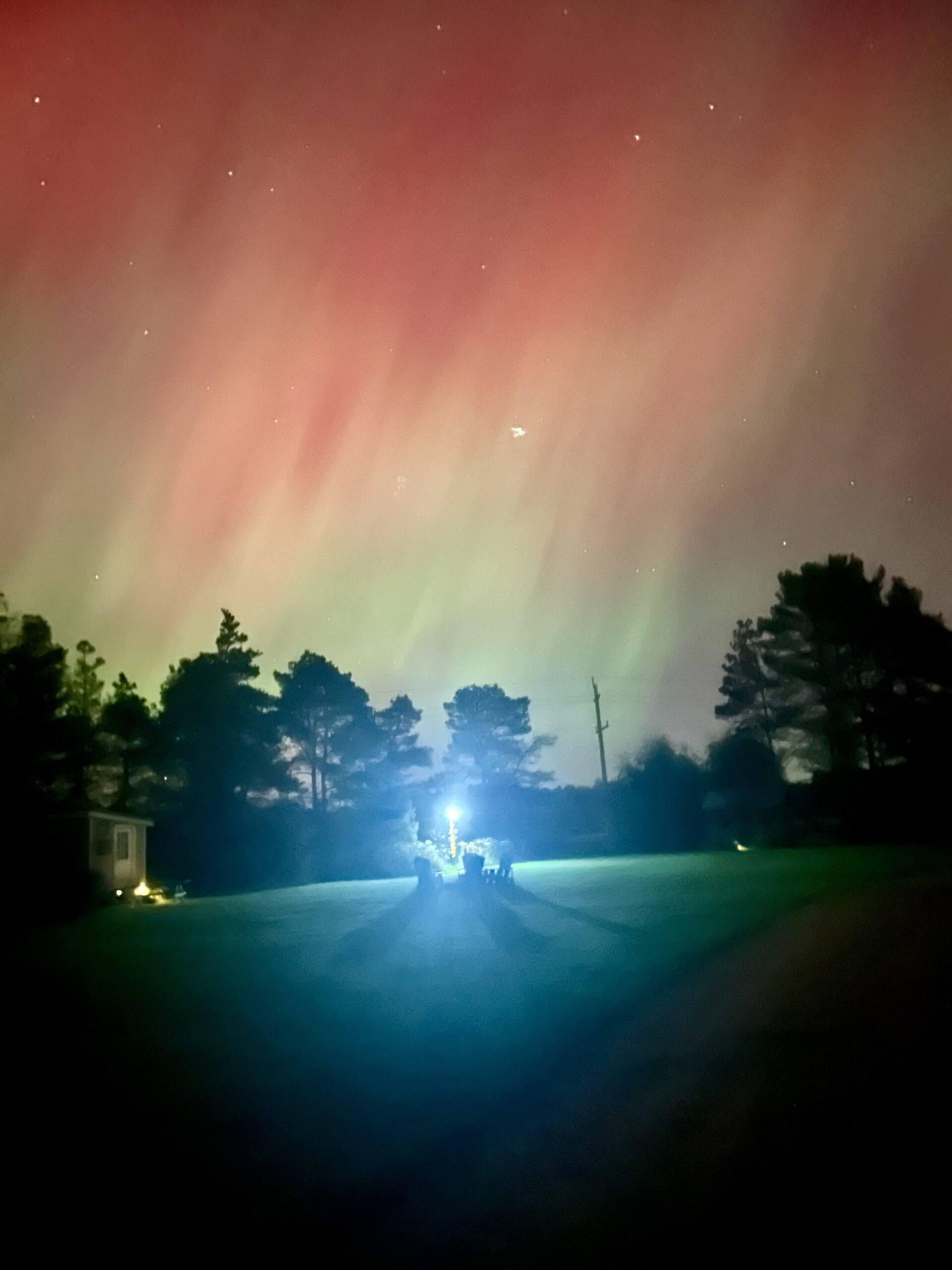
Dreamers Writing Farm is the physical home of the Dreamers community, a quiet, creative space on the Bruce Peninsula in Ontario. Writers, artists, and travellers stay here throughout the year in simple, literary-themed cabins, tents, and studio suites.