– Fiction by Eunice-Grace Domingo –
Featured in Issue 22 of Dreamers Magazine.
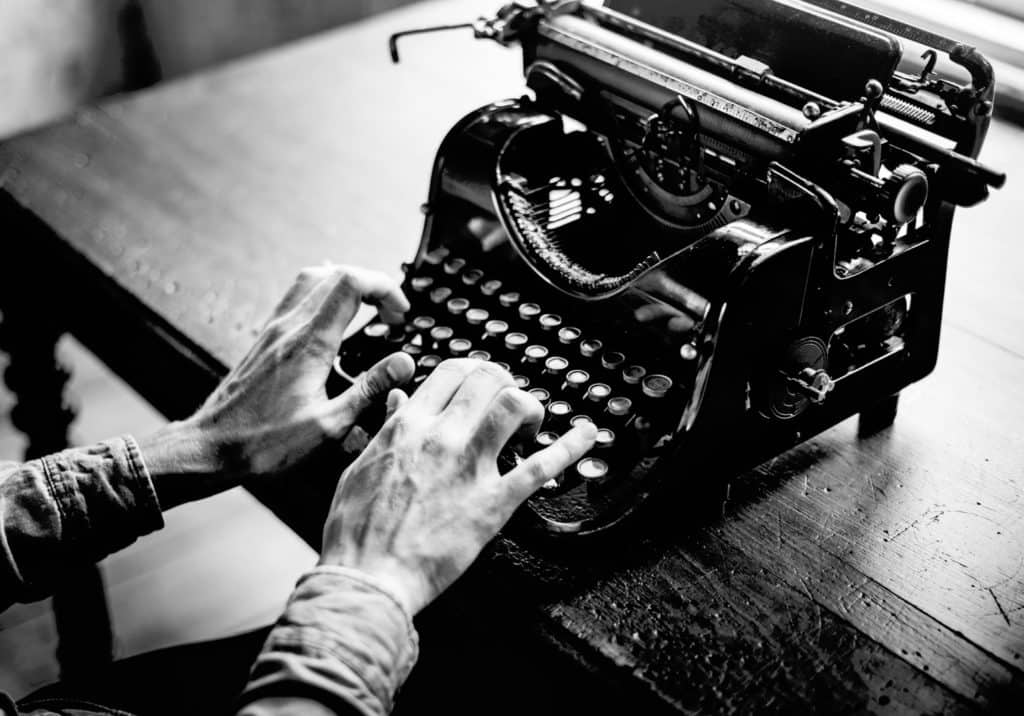
Thatcher was, by all accounts and sufferings of everyone who knew him, a genius. On the day he was to write the greatest novel in all eternity (or, at least, the greatest novel the ones in this particular eternity would ascribe such an inherently impossible penultimate lie to), he killed himself. He was twenty-two.
I use the term “genius” very liberally, for he was certainly brilliant, transcendent, and unweighted by the confines of
empty common sense, but he was also a specialist, and therefore an idiot to everything outside of what he knew. In a way, he was like all of us—in that we are all fleshy bubbles so quick to reveal how easy it is to pop ourselves—but nobody really liked him. He was a prick.
(I say “nobody really liked him,” but that isn’t exactly true. People like a drink before they realize it’s poison. Fish like a cave before they see its teeth.)
I met him in an Introduction to Shakespeare class. We were both second-years, hungover on literature and writing, but that was where our shadows stopped intersecting. For a misanthropist, he had a hilariously canny habit of attracting everyone’s attention. Partly because he was gorgeous; another because he was an ass. One half from the paradisiacal heavens, the other an insufferable hindrance.
He hadn’t shown up the first week of classes. I did, of course. Not because I am in any way angelic or an addict to education. It was just the thing to do. Thatcher never got that. He did, however, get Shakespeare. Our professor only forgave him for the tardiness, the ritualistic absences, the aggravating way he never raised his hand, because he knew everything. He was Hamlet, Coriolanus, every witch in Macbeth. Iago in the courtyard. Cassius in the battlefield. When he spoke to the professors, you saw them crumble to nothing, configuring ideas in their heads the way children do with cheap puzzles. Thatcher would talk, and the teachers would listen, like apprentices to their prophet or humbled audiences suddenly understanding they were witnessing a masterpiece. He was their equal, their usurper—that brief image Goliath had of young David bearing the slingshot sceptre before the stone
shattered his skull.
How could I resist?
I had my first impression of him during those baseless discussions the professors would have us do, where nobody was extraordinary and conjured no new ideas. Thatcher hated them with the ferocity of the insulted. We would be told to gather into groups, convalesce, and change the world—as if we were all promisingly compressed molecules of carbon, due to shit out a diamond with enough academic choking. We looked at each other nervously, feeling like the nine Athenians outside the labyrinth, eventually coming together, chewing the discussion question between our gums. I’d sometimes end up in a group with Thatcher, but he barely contributed. He’d lie back with a blank look and stare at anything but our faces. I am surrounded by exceedingly dull people, his body seemed to say. Sometimes the bastard would even sleep.
By the end, though, always last minute and always unprompted, he’d jolt up and come alive, the wiring in his brain shortcircuiting and spilling all over the floor. One always had the sense he had had enough, as if even being near our incompetence sucked the erudition from his soul. He spoke to us—finally, frantically, acknowledging our existence. His words always seemed like synonyms, as if he wanted to say something better, more fitting to the point, more eloquent and true, but his vocabulary was limited, making language impossible. He was never irrational enough to say that what we had said was wrong, but he made sure we knew we had definitely missed our mark. Lost our chance. Never quite arrived where we were told to go. He forced us to be corrected, and we sighed in relief: children chastised but done with the reckoning, moving on with a hand to hold that’d lead them to the light.
There were times, though, when Thatcher would lose his temper. (Why is everyone stupid, why don’t you see what I see, oh good God, why can no one solve the riddles? It’s obvious. It’s right there, see the connections? The parallel lines that link it in symphony?) We were two days into studying A Midsummer Night’s Dream. Our professor held the play in her tenured hands, reciting that speech by Theseus, the ignorant king: “. . . The lunatic, the lover, and the poet / Are of imagination all compact . . .” She finished it swiftly, putting the book down before looking at us, expectant.
“What is he saying?” she asked.
Always the silence, the malefactor confusion that hung above us like icicles. We were often like this: too stupid to answer, too cowardly to try—smart enough to know we’d be wrong no matter what. Sometimes Thatcher would save us and voice an opinion. This time, he butchered the silence.
“You vapid fucks,” he muttered, loud enough for everyone to turn to him in horror.
Our professor raised her eyebrows, her face teetering between distaste and amusement, which was par for the course when dealing with—
“Thatcher?”
“You’re all vapid fucks.”
“Thatcher!”
He was up almost instantly, frustrated beyond comprehension. Stomping to the back of the lecture hall, kicking open the door, and leaving the rest of us dumbfounded and red-eyed.
I don’t know what compelled me to follow him. There were forty minutes of class left, and all my books and other
belongings lay in a baggy heap underneath my chair. I stood and tripped over them, abandoning everything and not
knowing why.
Thatcher didn’t get far. I found him with his head buried in his hands, sitting just outside in the hallway. His breathing was a little irregular, and he was muttering something into his palms. Dazedly, I came and sat beside him. In the minute it took for him to realize I was there, I took the opportunity to look at him more closely. Analyze him, like those passages we wrote essays on. What were his metaphors? The telling signs that foreshadowed his end?
“I know you.” Raising his head. Meeting my eyes.
“You do?”
“Why’d you follow me?”
“I don’t know.”
“Prof tell you to get me?”
“No.”
“Yeah, she wouldn’t.” A small smile. No longer fettered. Shuffling off the anger. “She was thinking the same thing.”
“The same thing?”
“What I said.”
“That we were all vapid fucks?”
He stared at me. Through me. The way he looked at a passage before he dissected it with explication. “I know you,” he repeated.
“You’ve said that.”
“Do you want to get out of here?”
My things were back in the classroom. “To where?”
He groaned and gently bumped his head against the wall we were leaning on. “Anywhere. Out of here.”
“I barely know you.”
“We can fix that.”
We never did. I’d learn things about him in the four years to come, but he never let me in. Uselessly, I clung to every sliver of information, history, or snippet of personal background he fed me. The intricacies of the scholarship he was given after graduating; how, if he maintained a good average and didn’t miss most of his classes, didn’t get into any trouble, didn’t piss off most of the staff, then he’d get a decent ride through college. And, with that, of course, I found out about the lack of any funding from both his biological makers. About his father’s inability to keep anything alive, especially a career, the pet dog, the houseplants Thatcher set on fire. (Why did you set them on fire? I’d asked him, his head on my lap but hidden by shadow. They were already dead, he’d said, getting up, grabbing his jacket, slamming the door.) I found out about the older neighbourhood kids who made any hands on him feel like lethal gas after they were satisfied with his crying. He told me about winter road trips to his grandparents’ house in the middle of nowhere, growing mad with the loneliness; staring at the vermillion, poppy, blood-red Christmas ornaments and wanting to bite into them like Adam did. He told me about the body count of therapists, counsellors, social workers, psychiatrists, nurses with big eyes that asked you, On a scale of one to ten, how bad is it today? He told me about the green pills that gave him ragged dreams. About the screaming in his head. About the drippingly hilarious irony of him hating nothing more than the thought of loving himself. All of this had poured out of him like those frenzied tangents he’d say near the end of class discussions, spilling on the floor like spoiled milk that had upset his stomach and just needed to be vomited out. But with Thatcher, it had always felt as if every step closer was a lie I
told myself repeatedly, like a false promise. Or a bad joke. I was unscrambling the portrait, splotching the paint. Never actually seeing him for what he was.
I did learn other things, though. For one, he had a mouth on him. He never shut up. And two, his tongue was just as much of an asshole as he was. Especially when it was in me. Touching me. Dragging along places that left me swearing under my breath.
Thatcher was a prick like that.
On that day he walked out of Midsummer and invited me for “anywhere,” looked at me with such honesty, we’d taken my car and driven around the campus, then the city, then beyond the white-fenced walls. We debated Hemingway, him always winning, me getting tired. He traded me thoughts on Plath, Perkins-Gilman, Mayakovsky, Woolf, laying them down like lovers beneath my feet in exchange for the patchwork company. We bought cheap ice cream cones at the café near the English building. We went to the river and he threw an essay he got back that day into the black water (I caught a glimpse of the paper before it drowned in the abyss: 94%. Excellent work in red ink). The sun above eventually turned into the moon looking down on us: me on top of him as he wrapped his arms around my waist, kissing his lips and not knowing what the hell I was getting into. I’d spent just a few hours with him, and already I was possessed.
It went on for the rest of university. Him and I. Thatcher and me. We had the same major, but I was the student. He was the books, the library, the obscenity of an unfinished novel. He didn’t just soar through the essays, the manuscripts, the deadlines we all slaved over—he was phenomenal, a beacon, always ahead and never slowing down. I didn’t mind lagging behind. Or, at least, I told myself I didn’t. There wasn’t much room to complain. It was always about Thatcher. Thatcher not coming to class for two weeks and disappearing until he chose
to come back. Thatcher needing to go to the hospital more often and not letting me visit him. Thatcher shivering outside my apartment from whatever he’d taken earlier. Thatcher kissing my neck and plucking the moans out of my skin. Thatcher buying a typewriter and loving it more than me.
And when we graduated, he looked down at that diploma certificate as if a part of him was itching to ask, Can we drive to the river, just like we always do? Please, can we do it? Anywhere, to be rid of it. There are so many things only the water can smother. I earned this like you did, but it tastes so different.
I took him to the bar where everyone was celebrating, toasting to the freedoms and potentials of tomorrow. He’d
drunk himself to slurry distortion and I dragged him back to my apartment to fall apart safely. He fell asleep fast, and I crawled in next to him after I stripped off the graduation suit and wiped some of the drool off his face. I would wake up a few hours later and find him sitting up on the mattress, fingering through the shelf underneath my bedside table.
“Shit, Thatcher. What’re you doing? Come back to bed.”
He did, but not before he grabbed the universal tome of Shakespeare’s Complete Works that everyone seems to own. He must’ve had a headache, or some of the fuzziness from the alcohol swimming inside him, but he didn’t look tired. I looked up at him quietly, my head on the pillow, knowing he’d talk eventually.
“Remember when you followed me?”
“To the bathroom while you threw up? Yeah, that was about three hours ago.”
“No. From class. From Midsummer.”
“Mm.”
“Our prof was talking about Theseus. Nobody got it.”
“You got it.”
“Yeah. It was obvious.”
“Not all of us are geniuses.”
“Why not?”
Sigh. Me turning over to face the wall.
“Why’d you do it?”
“Do what?”
“Go with me.”
“Dunno. Can we sleep now?”
“I feel as if nothing I do is enough.”
Groaning. “You’re drunk, Thatcher.” I looked at the clock. “It’s 6 AM.”
“I have this idea.”
I flopped back on the bed. “For a poem?” I said quietly. He liked poetry. Wrote a lot of it.
“No. A novel.”
I yawned, closing my eyes again. “That’s new.”
His voice was disembodied now. A ghost in the dust. I vaguely heard him flipping some pages, no doubt rereading that passage that made him angry so long ago. Theseus’ philosophy. The duke of Athens’ ruminations. “I have notes written down. Somewhere. Written down.”
“I’m sure you do.”
“Been planning it for forever, it feels.”
“Mmm.”
“I think you’d like it.”
“Mhmm.”
“You don’t believe me?”
“I do, Thatcher. I will. Like it, I mean.” I was dozing off, but I knew he wanted to keep talking. “It’s about time you had a big project,” I said slowly. An afterthought.
“What’s that supposed to mean?” He sounded hurt, but I was so tired that I barely registered it. If I did, I doubt I would’ve cared. It had been four years. He was special, but you take that for granted after a while. Drop a pearl into the ocean and all the rocks will stop needing it to feel beautiful. Just give them time.
“Nothing, Thatcher.” I mumbled mindlessly. “You just don’t commit to anything.”
(You’re all vapid fucks.)
Suddenly, he’d thrown the large book over the bed and scrambled onto my body, straddling my hips and pulling my
face to his. I was shocked, the exhaustion quickly evaporating with each whine he moaned into my mouth. Still confused but so used to the motions, I adjusted his legs to wrap around my torso, drawing him closer so our chests collided. The blankets around us crumpled like paper, our movements sloppy and careless in execution.
How could I have known he’d kill himself in the morning? (Been planning it for forever, it seems… Doctor’s increased my dosage… Can’t come tonight, sorry, I hate your new friends and the way they look at me.) I kissed the wrists he’d soon split open—with the razors from my bathroom and whiskey afterglow. (Hemingway, Plath, those hallucinations who called themselves artists, what are they famous for?) I fucked him and didn’t love him, and it was a terrible goodbye. (Nothing I do, everything I don’t, it’s never enough, don’t you know? Of course you don’t, you
beauty. I see more devils than vast hell can hold.)
And as his blood seethed into the grass, just outside campus but far enough away to make us believe he was just off doing God knows what again for a few days (he always disappears, but he comes back), I think he thought—his last thought— about why the ground didn’t turn to a golden powder beneath him. Why he wasn’t swallowed up by the earth, like a pill dissolving on the tongue.
Thatcher was a prick like that.
He left no note. Just the outlines he’d made for the novel he talked about, the one that would’ve been magnificent, had I not written it. I did write it, though. What else was there to do? I had followed him out of the lecture hall, driven him to the river, stayed by his side fully knowing I didn’t and would never understand. I wrote it, but it was horrid, mangled, and—with all due respect to the reviewers who claimed it as stupendous— very ugly in its completion.
I wrote it, and I got it published, and it was a book. The only one I’d ever write. My sole wound inflicted on the face of artistry.
Thatcher would’ve written it better. The dead always have something more poetic to say.
So do the lunatics. So do the lovers.

About the Author – Eunice-Grace Domingo
Eunice-Grace Domingo has a BA in Honors English and an MA in English Literature from the University of Saskatchewan. She has been a recipient of the Peter T. Millard Award for queer literary research, as well as the Avie Bennett Prize for Canadian Literature, the Equity, Diversity, and Inclusion (EDI) Scholarship in English, and the Hantelman Humanities Scholarship. Her graduate research focuses on media studies, adaptation theory, and 20th century Japanese literature. She has been accepted into several conferences, such as the Heart and Souls Conference and the British Graduate Shakespeare Conference. Her poetry, short fiction, and nonfiction appear in numerous anthologies and journals like The New York Literary Magazine, In Medias Res, The Taj Mahal Press, The Lamp, and Moon Tide Press. She was born in Manila, Philippines and immigrated to Canada in 2007 with her family.
Meanwhile, at Dreamers…
Fireside Writing Retreat

It’s simple; a set of prompts, a loose structure, and time set aside to move through it at your own pace. You can follow it closely or not at all. There’s no expectation to produce anything finished.
Dreamers Writing Farm
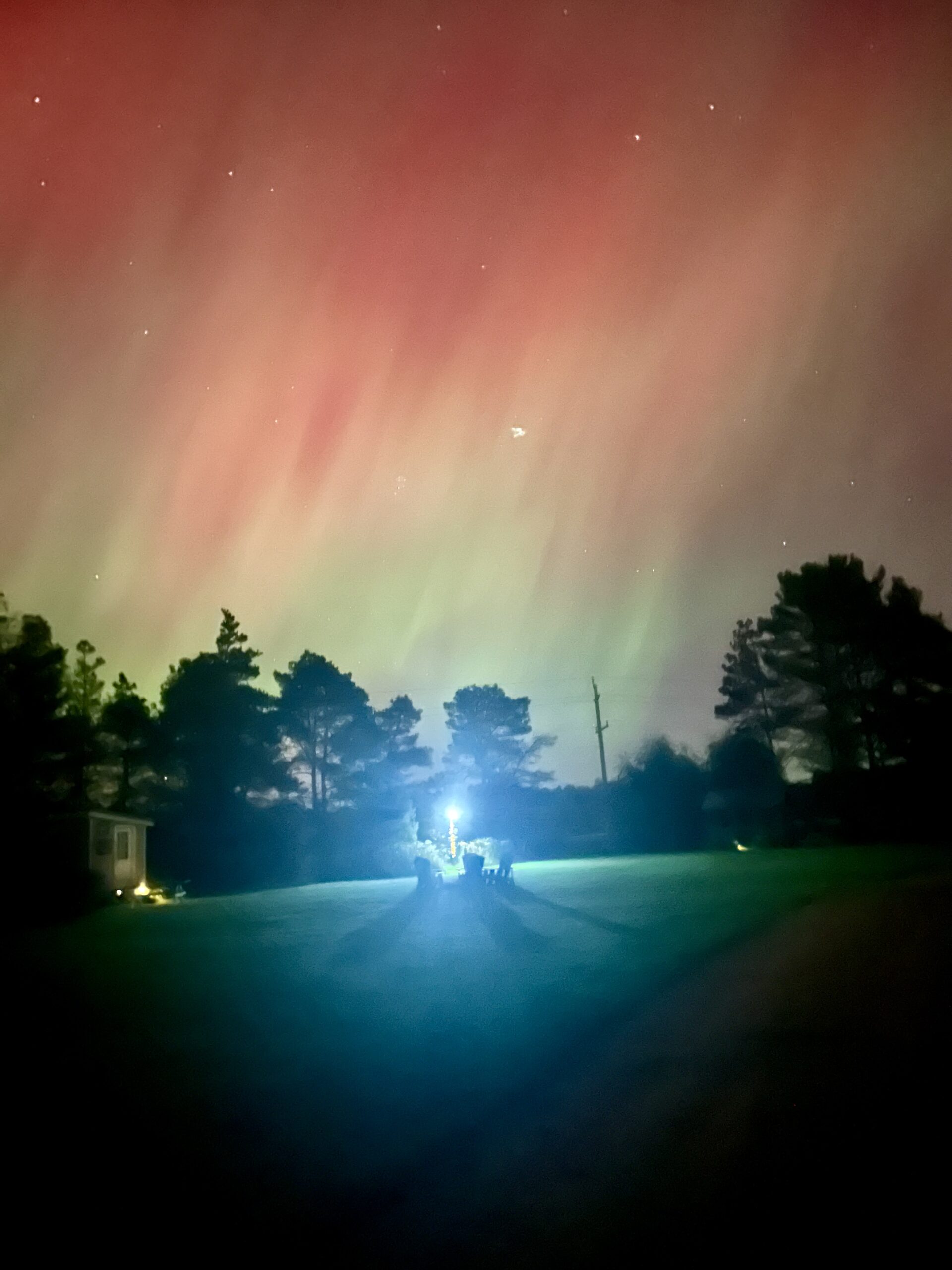
Dreamers Writing Farm is the physical home of the Dreamers community, a quiet, creative space on the Bruce Peninsula in Ontario. Writers, artists, and travellers stay here throughout the year in simple, literary-themed cabins, tents, and studio suites.